
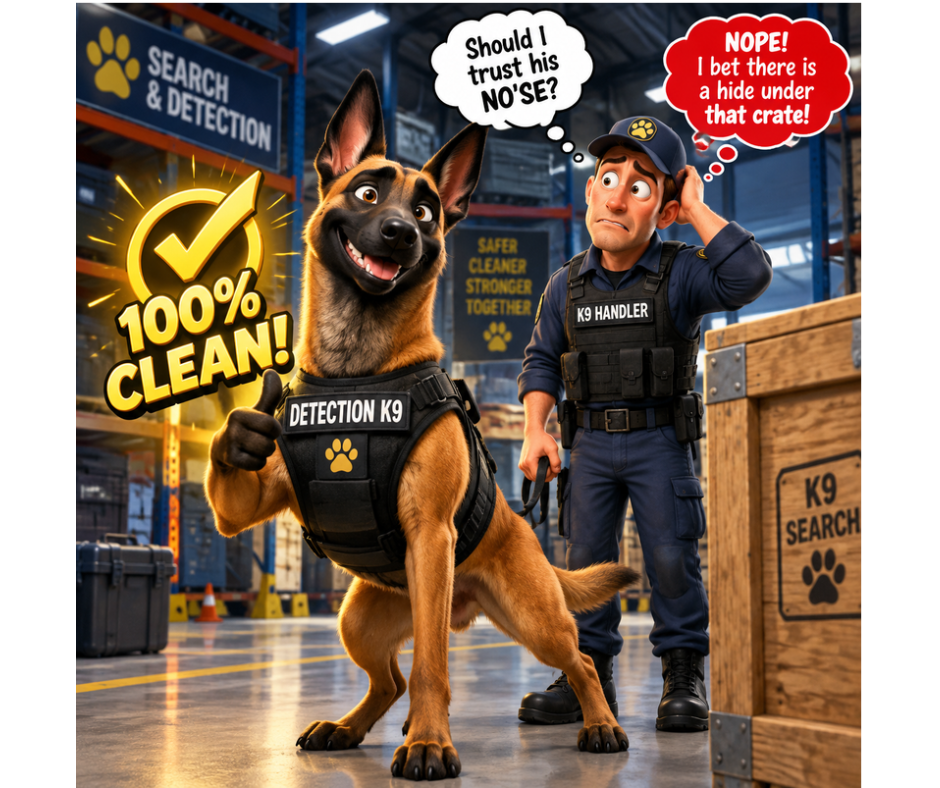
If the Nose Knows, Why Don't We Believe the Dog's "No"? Reviewing What Keeps Handlers from Trusting That "No Means No"
In scent sports, we celebrate the find, but what happens when the dog gives a clear "NO"—and we ignore it?Our latest blog explores why handlers struggle to trust their dog's "NO" and how current trial norms reward wandering persistence over precision:
The Autonomous Miss: Rewarding dogs even when they blow past a hide multiple times before finally finding it.
The "Done Hide" Bypass: Conditioning scent dismissal by letting dogs ignore active odor plumes after a find.
The Human Anxiety Loop: Second-guessing the dog and re-checking areas due to past unreliability.
The Solution? What if we started recording every uncommitted pass through accessible odor as an official miss? Shifting from a simple pass/fail lottery to strict stimulus control is the only way to build true, ironclad trust in the dog's "NO."
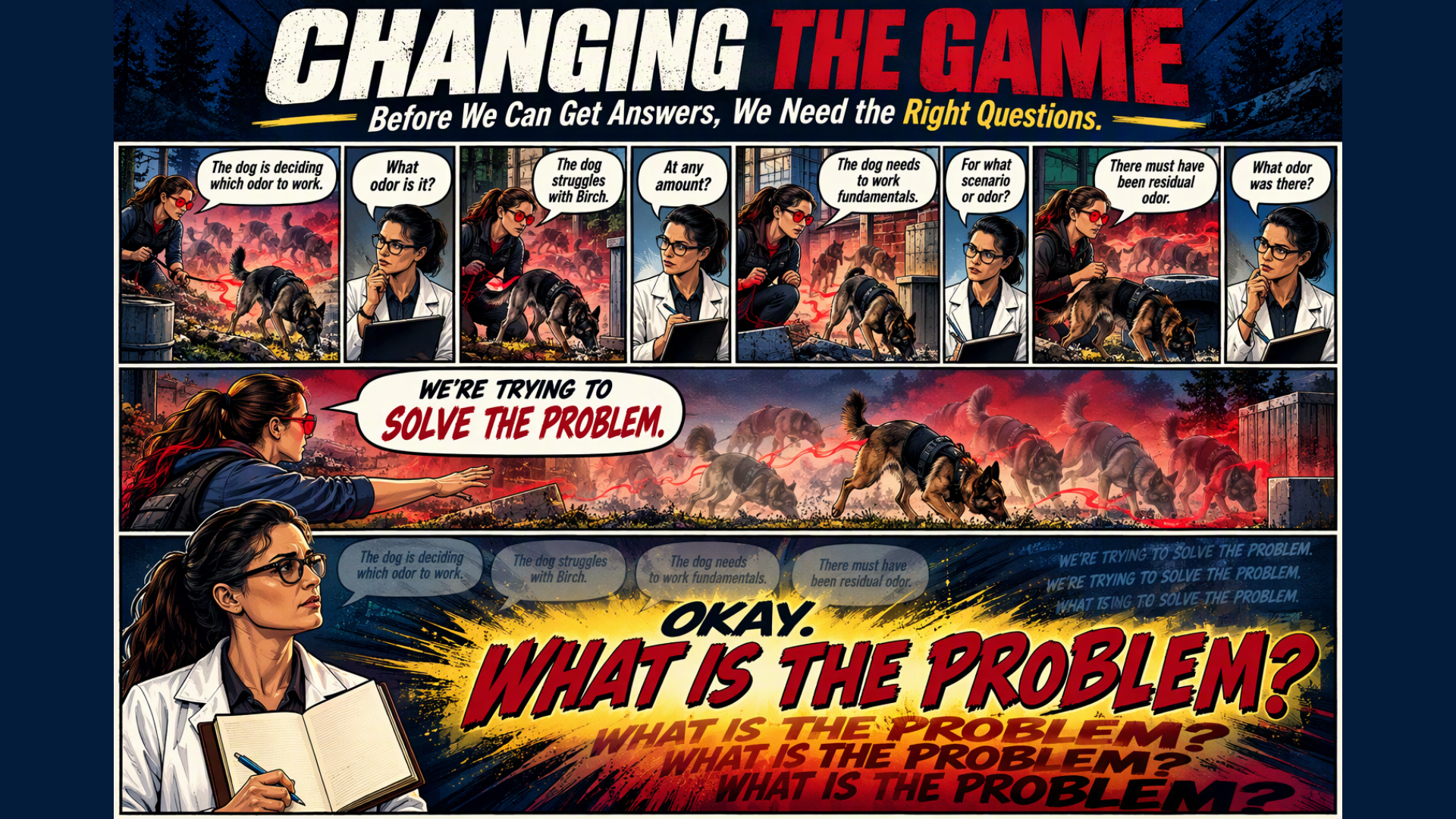
Changing the Game: How Objective Record-Keeping Turns Scent Sport Logs Into Trial Predictions
Traditional scent sport logging often relies on subjective memory, selective impressions, and anecdotal reflections, which fail to reveal true performance trends over time. By shifting to objective, data-driven record-keeping—tracking key metrics such as Proportion of Correct Detection (PCD), target odor specifics (soak time, height, depth), environmental conditions, and false response contexts—handlers can eliminate guesswork and uncover hidden behavioral patterns.
This structured approach transforms historical training logs into reliable trial predictions. Instead of entering competitions uncertain of a dog's readiness, handlers can use multi-variable drilldowns to evaluate performance across specific scenarios (such as known vs. blind searches or indoor vs. outdoor environments), isolate weak spots, and targetedly refine training. Ultimately, asking the right questions of your data ensures continuous improvement and builds true, measurable reliability when it matters most.
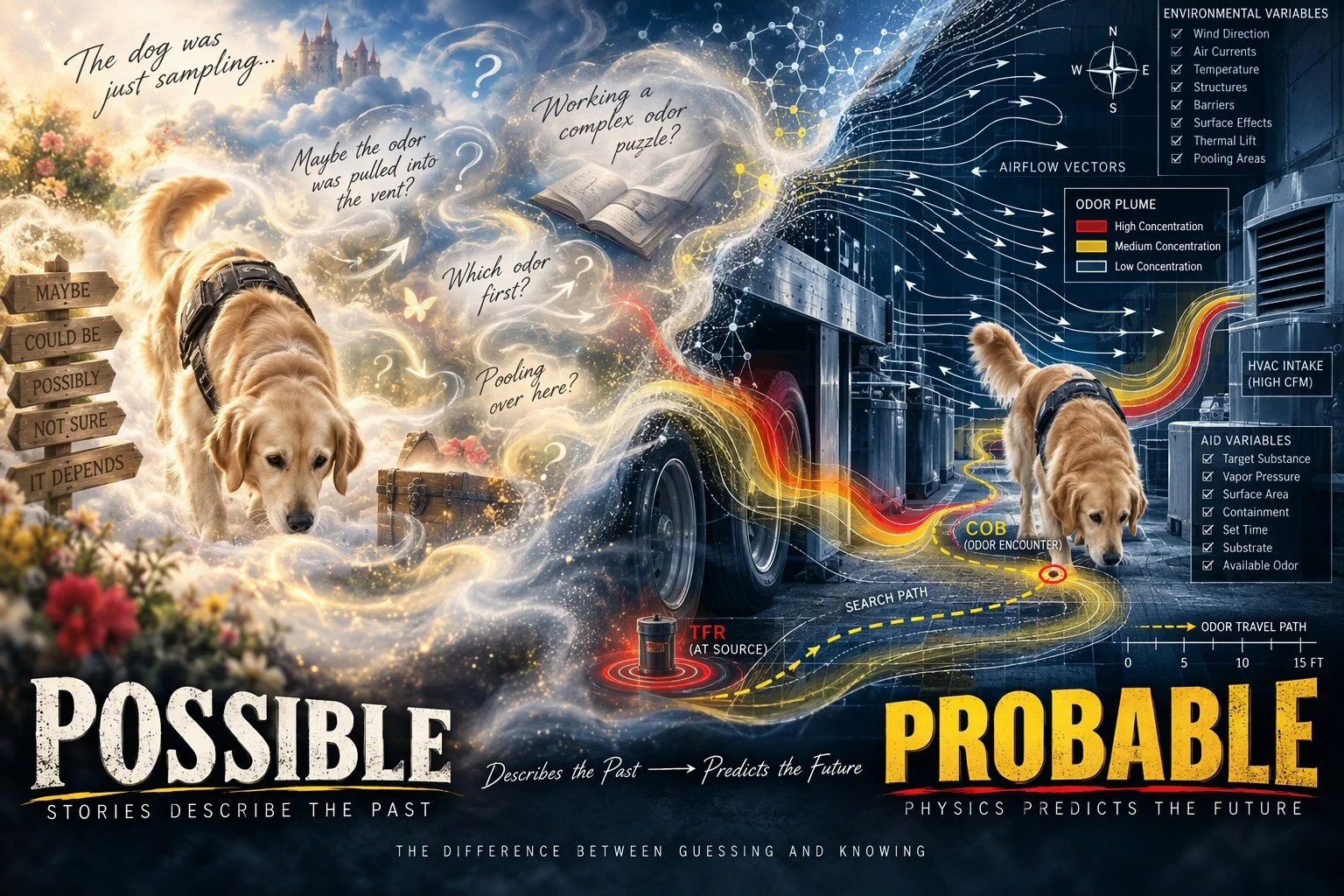
Possible Describes the Past. Probable Predicts the Future
When a search goes really well or sideways, after-action stories start immediately : "The dog was just sampling," or "The odor got pulled into the vent."
Those convenient excuses might explain the past, but they won't help you on your next run.
In my newest article, I explore the difference between possible and probable, why physics can falsify impossible explanations immediately, and how prediction, replication, odor availability, and odor movement transform post-hoc stories into testable explanations.
True progress in detection work starts when you stop guessing what your dog is thinking and start reading the physical environment. When you understand the actual fluid dynamics, vapor pressure, and airflow vectors at play, you can precisely explain why the dog behaved the way they did.
Once you understand it, you can recreate it.
When you get good at recreating, you can create and predict outcomes in training.
And when you are proficient in creating and predicting in training, everything changes when you step into a blind search.
Even when you don't know where the hide is, reading the environmental variables lets you anticipate how odor moves through the space. Instead of forcing your dog to sweep every square foot of dead space, you route them cleanly into productive air.
Stop reacting after the fact. Learn how to turn post-hoc stories into true predictive handling.
👉 Read the full article on the blog:
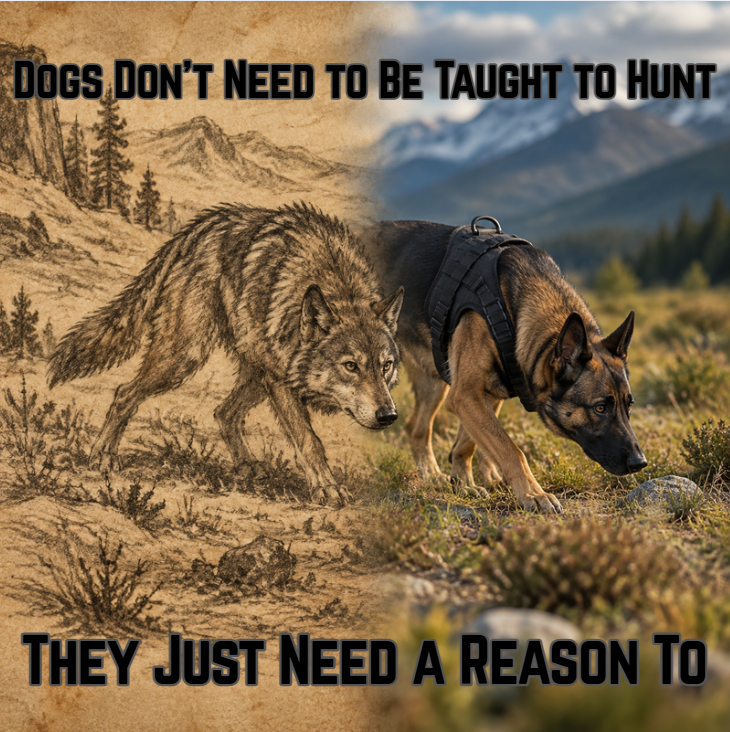
Dogs Don't Need to Be Taught to Hunt. They Just Need a Reason To.
Ever wonder if we sometimes overcomplicate things? Here’s a fun fact: your dog doesn’t actually need to be taught to hunt. Their ancestors mastered it long before we ever showed up with treat pouches and scent kits.
Long before interacting with humans, canids were apex predators. Hunting wasn't a "drive"—it was simply the behavior necessary to fulfill primary survival needs like food, water, and social interaction.
So why do we sometimes feel the need to teach this predator what millions of years of evolution already perfected?
When a search goes sideways, it’s so easy to lean on familiar explanations:
"He just didn’t feel like hunting today."
"She lost her motivation halfway through."
"He was just sampling everything first."
But what if it’s not about mindset or lost drive at all? When search performance dips, it usually comes down to the actual mechanics of reinforcement:
The Satiation Trap: Food reward dogs run a high risk of satiation. Once they are not hungry or are tired of a type of treat they no longer have a reason to search in order to obtain it.
Competing Payouts: If the room smells like a dozen more interesting things than your reward, the environment wins, the search for target odor comes in second.
The "Vegas Effect": Predictable, every-time rewards lead to plateaus and decline in search behavior. Intermittent reinforcement, on the other hand, supercharges drive and stamina.
The Fatigue Spiral: As a dog gets tired, their detection threshold actually rises—meaning the more exhausted they get, the harder it is for them to detect odor, leading right into frustration and burnout.
It’s rarely about a dog "forgetting" to hunt. They already know what hunting is; they just need the right reinforcement.
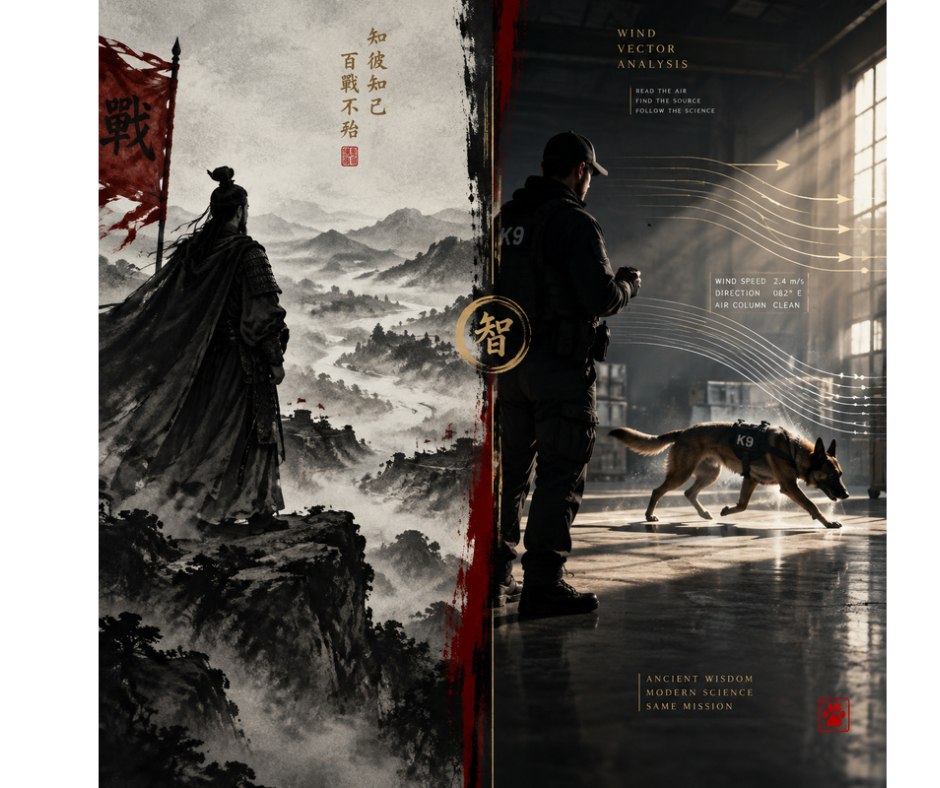
The Art of Detection
What happens when we borrow a title but ignore the principles that gave it meaning?
For more than 2,000 years, The Art of War has influenced leaders, strategists, athletes, negotiators, and professionals across countless fields. Yet invoking "The Art of..." carries a responsibility: to honor the ideas that made the original work endure.
In this new series, The Art of Detection, we'll explore detection through the lens of Sun Tzu's Five Constant Factors: The Moral Law, Heaven, Earth, The Commander, and Method & Discipline.
This isn't about slogans, personalities, or defending favorite theories. It's about responsibility. Responsibility to the science. Responsibility to the dog. Responsibility to the reader.
And perhaps most importantly, the discipline to pursue what is correct instead of merely what feels right.

Follow the Queen: Why Scent Detection's Best Start is a Fast-Paced Street Game
How "Dealer-Shuffling" Your Setup Bypasses Months of Visual Overshadowing and Shapes True Olfactory Hunters from Rep One

The Illusion of Intuition: Anecdotal vs. Empirical Trust in Canine Detection
If you are reading your dog, then you are not trusting your dog.

The "Converging Odor" Dilemma: Bridging the Gap Between Field Metaphors and Physical Science
How Basic Physics and Chemistry Expose Nosework’s Favorite Excuse

The Physics of the Scent Line: Bridging the Gap Between Training and Trialing
How Inconsistent Environmental Variables and Static Reviews Can Accidentally Cloud Our Performance Audits—and How to Replicate Real Trial Conditions